
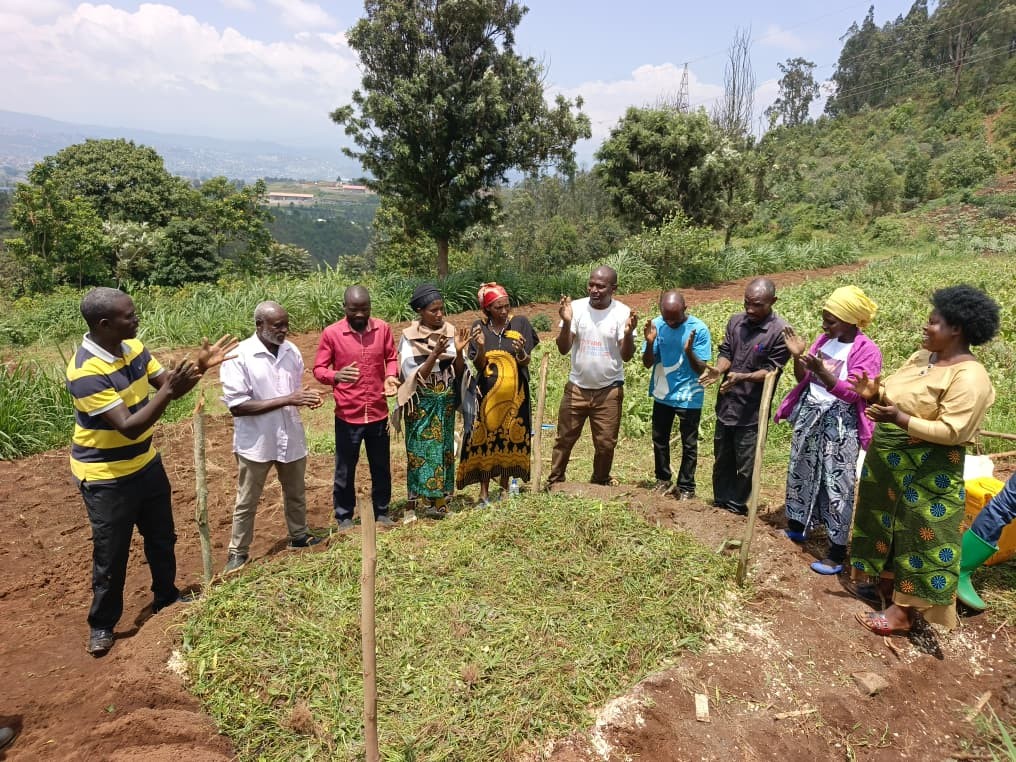
Nzahaha Sector, Western Province, in Rusizi District. In a significant milestone for sustainable agriculture in Rwanda, the Rural Development Inter-Diocesan Service (RDIS), in partnership with the World Resources Institute (WRI), has successfully completed a transformative Training of Trainers (ToT) program aimed at building ecological resilience and food security for smallholder farmers.
The five-day intensive training, conducted from February 9–13, 2026, at the Murangi Farm Field School, equipped 10 lead trainers with the knowledge and skills to champion agroecological practices across the Nzahaha Sector, a region characterized by hilly terrain, fragmented landholdings, and declining soil fertility.
Learning by doing: a hands-on approach.
The program’s success lay in its practical methodology, with 45% of training time dedicated to field-based learning. This “learning-by-doing” approach enabled participants to move beyond theory and master real-world applications of sustainable farming techniques.
The results were remarkable. Participants’ knowledge of agroecological principles surged from 35% to 90%, a 55-point improvement. Similarly, practical skills in composting and integrated pest management (IPM) jumped from 40% to 95%, while confidence in facilitation and farmer mentorship increased by 40 percentage points, rising from 50% to 90%.
Three pillars of sustainable agriculture.
The training focused on three core areas designed to restore ecosystems while boosting agricultural productivity:
- Soil and water wtewardship: Trainers learned advanced techniques in compost preparation, mulching, and natural soil-building methods to combat the region’s persistent soil degradation challenges.
- Ecological pest management: Participants mastered the creation of botanical pesticides using locally available materials such as chili, garlic, and soap, dramatically reducing farmers’ dependence on expensive chemical inputs.
- The Farm Field School (FFS) Model: By adopting the FFS approach, the 10 newly trained facilitators are now positioned to mentor an additional 100 farmers, creating a powerful multiplier effect that will spread sustainable knowledge throughout the community.
Innovation born from necessity.
One of the program’s most valuable lessons emerged from adaptive problem-solving. When specific botanical materials were unavailable, trainers successfully pivoted to alternative local resources demonstrating a fundamental principle of agroecology: sustainable solutions often exist within the landscape itself.
The training also incorporated a competitive element, with awards recognizing participants who showed the most significant improvements in technical skills. This approach fostered engagement and accelerated learning outcomes.
From training to transformation.
As Rwanda’s agricultural Season B begins, RDIS and WRI are moving swiftly from training to implementation with a three-pronged strategy:
- Demonstration Plots: Each trainer will establish a 0.1-hectare “living classroom” on their own land to showcase agroecological techniques in action.
- Community Replication: Training schedules aligned with the current agricultural calendar will ensure farmers can immediately apply land preparation and planting techniques.
- Continuous Coaching: RDIS will provide ongoing on-site technical support to ensure successful adoption of these practices at the household level.
Building a resilient future.
“This program represents more than just agricultural training,” said a program representative. “By bridging traditional knowledge with scientific agroecology, we’re fostering a landscape where both the soil and the community can thrive.”
The initiative addresses critical challenges facing Rwandan smallholder farmers, including land fragmentation, soil degradation, and food insecurity. By empowering local trainers to become champions of sustainable agriculture, RDIS and WRI are creating a foundation for long-term ecological and economic resilience in the Nzahaha Sector.
As the 10 trainers begin their work with farming communities, the ripple effects of this five-day program are expected to reach hundreds of households, transforming not just farming practices, but the relationship between people and the land they cultivate.
More photos:
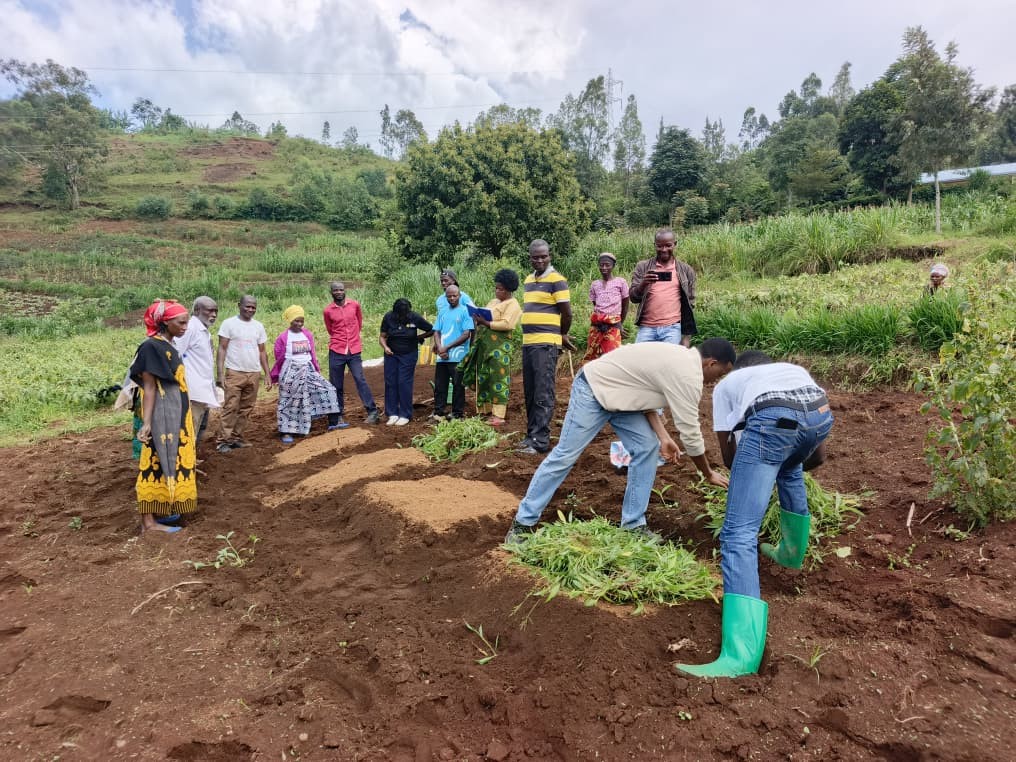
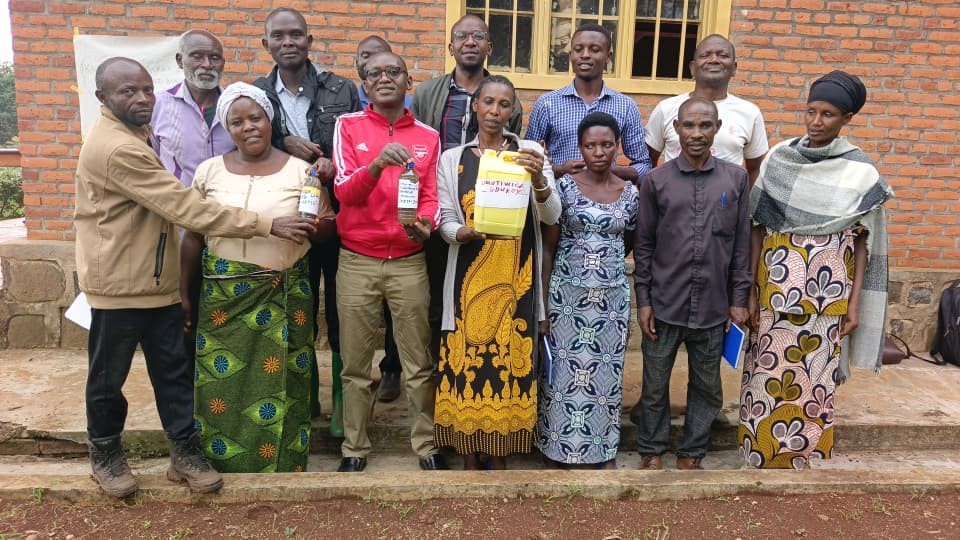
Photos: The lead trainers equipped with the knowledge and skills to champion agroecological practices.